Brewers Create Conditions. Yeast Makes Beer.


During fermentation, yeast does far more than make alcohol. This is the stage where beer truly takes shape, where it moves from sweet wort to something expressive, layered, and alive. If the brewhouse is about preparation and control, fermentation is where biology takes over and begins to interpret those decisions.

As yeast consumes sugars, it produces alcohol and carbon dioxide, but those are only part of the story. Along the way, yeast also creates a wide range of flavour-active compounds that define aroma, taste, and mouthfeel. These include fruity esters, spicy phenols, higher alcohols, sulfur compounds, and organic acids. They may exist in tiny concentrations, but they have a massive impact on how a beer is experienced.
Many flavours people associate with beer styles are born here. Banana and clove in wheat beers. Apple and pear in clean ales and lagers. Soft floral notes, subtle spice or gentle minerality. These characteristics do not come from malt or hops alone. They are formed during fermentation, inside the yeast cell, as yeast responds to its environment.
Every yeast strain carries its own genetic potential. Some strains naturally lean fruity or spicy, while others remain neutral and restrained. But yeast character is never fixed. Fermentation temperature, oxygen availability, nutrient levels, pressure, and time all influence which flavours are expressed and how intense they become.
When yeast is healthy and fermentation is well managed, flavours feel integrated and intentional. When yeast is stressed, rushed, or poorly supported, those same pathways can produce harsh, rough, or unbalanced results.
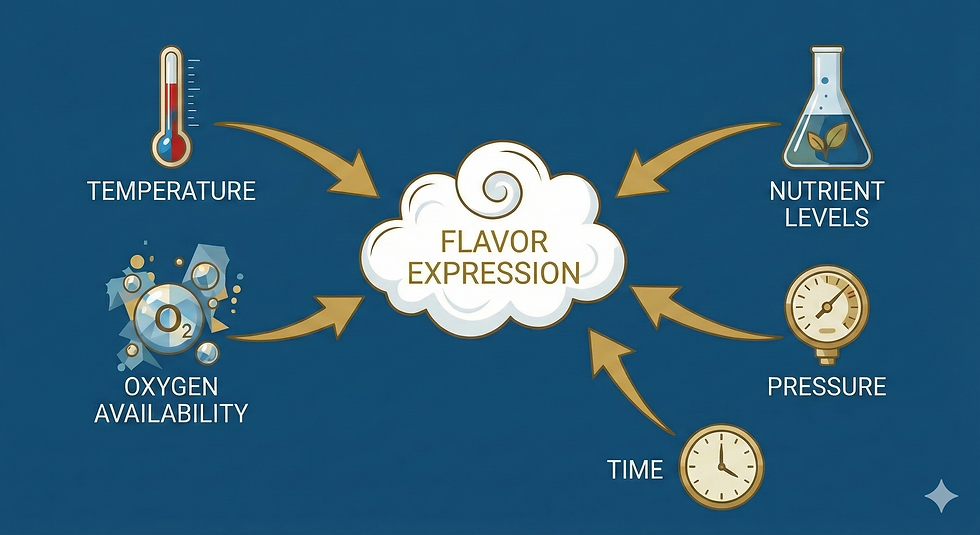
The same recipe, brewed twice, can taste entirely different simply because fermentation was handled differently.
This is why fermentation deserves respect. It is not just a step between brewing and packaging. It is the heart of beer flavour development. Malt provides the food. Hops provide structure. But yeast is where flavour is shaped and identity is formed.
In the end, brewers don’t manufacture flavour directly. We design the conditions, guide the process, and let yeast do the real work - quietly turning intention into beer.


Comments