The First Sip Can Wait: A Way to Taste Beer Better

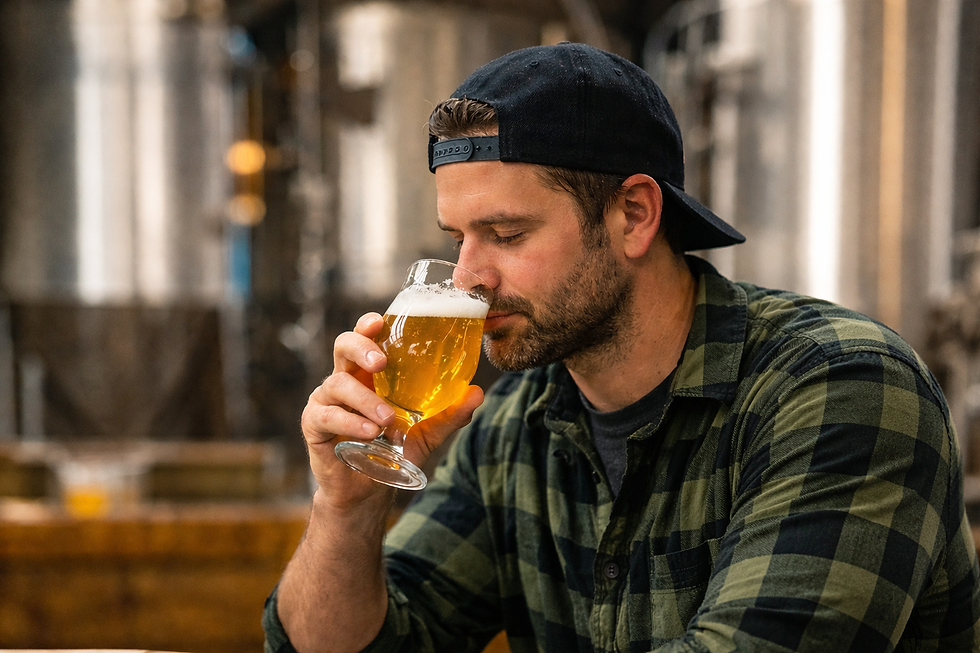
A small habit quietly changed the way I understand beer. Nothing dramatic, no new ingredient, no advanced technique. Just a pause before the first sip. For the longest time, I drank beer the way most people do. The glass arrives, you lift it, you drink. Simple, efficient, almost automatic. And honestly, there is nothing wrong with that. But somewhere along the way, inside breweries, during tastings, in those slower moments around tanks and fresh pours, I started waiting. Just a few seconds. And that small shift started to change everything.
Because beer is not just something you drink, it is something you read. And like anything worth reading, you do not rush the first line.
The first thing the beer gives you is not flavour, it is aroma. Before the sip, before the palate engages, the beer is already telling you a story. Volatile compounds rising out of the glass, shaped by raw materials, fermentation, and time. This is where the beer introduces itself. And when you actually pause, you begin to notice it more clearly.
Is the aroma bright, lively, inviting you in, or is it a little closed, holding back? Are the hops leading, giving you fruit, citrus, resin, or is the yeast speaking louder, adding spice, softness, or depth? And then there are the subtle layers, a faint sulfur note, a gentle graininess, a quiet warmth. These are easy to miss when you rush, but they often carry the most insight. Not everything is a flaw. Sometimes it is process, sometimes it is style, sometimes it is intention. That pause gives you access to all of this.

Then comes the sip, and this is where it gets interesting. Because now you are not just tasting blindly, you are checking something. You are comparing what you expected with what actually shows up on your palate. Does it line up, does the flavour follow the aroma? When it does, the beer feels complete. There is a sense of alignment, of things falling into place. It just makes sense. And when it does not, that is not a failure. That is where learning happens.
Maybe the aroma was expressive, but the palate falls short. Maybe the nose was subtle, but the flavour opens up more than expected. Either way, you have just understood something new, about the beer, and about how you perceive it. That is the shift, from reacting to observing.
If you want to experience beer a little differently, try this.
Pause before the first sip.
Take a proper moment with the aroma, not a quick sniff.
Sip, and let it sit on your palate for a few seconds.
Then ask yourself one question, did it match what you expected? No pressure to describe it perfectly, no need for technical language. What you are building is a simple feedback loop between your nose and your palate.
And over time, that loop sharpens. You start to trust what you are sensing. You notice more without trying harder. Certain beers stay with you longer, not just because they taste good, but because you understood them better in that moment. All of this, from a pause that most people skip. And once you get used to it, it is hard to go back. Because that is where beer becomes more than just a drink. That is where it becomes something you experience with intent.


Comments